Nicholas Polari
Dalla parte di Codarossa11 December—01 February 2026
Opening: 11.12, 19h00
"Dalla parte di Codarossa" è una personale di Nicholas Polari, in mostra da Almanac da giovedì 11 dicembre 2025.
L’approccio di Nicholas è profondamente influenzato dalla sua lunga esperienza negli sport di resistenza, che l’artista assume come strumenti di osservazione e trasformazione. Al centro della sua ricerca vi sono le pratiche di adattamento: modalità con cui il corpo risponde, si rimodella e istituisce nuovi rituali per orientarsi in contesti in continua mutazione.
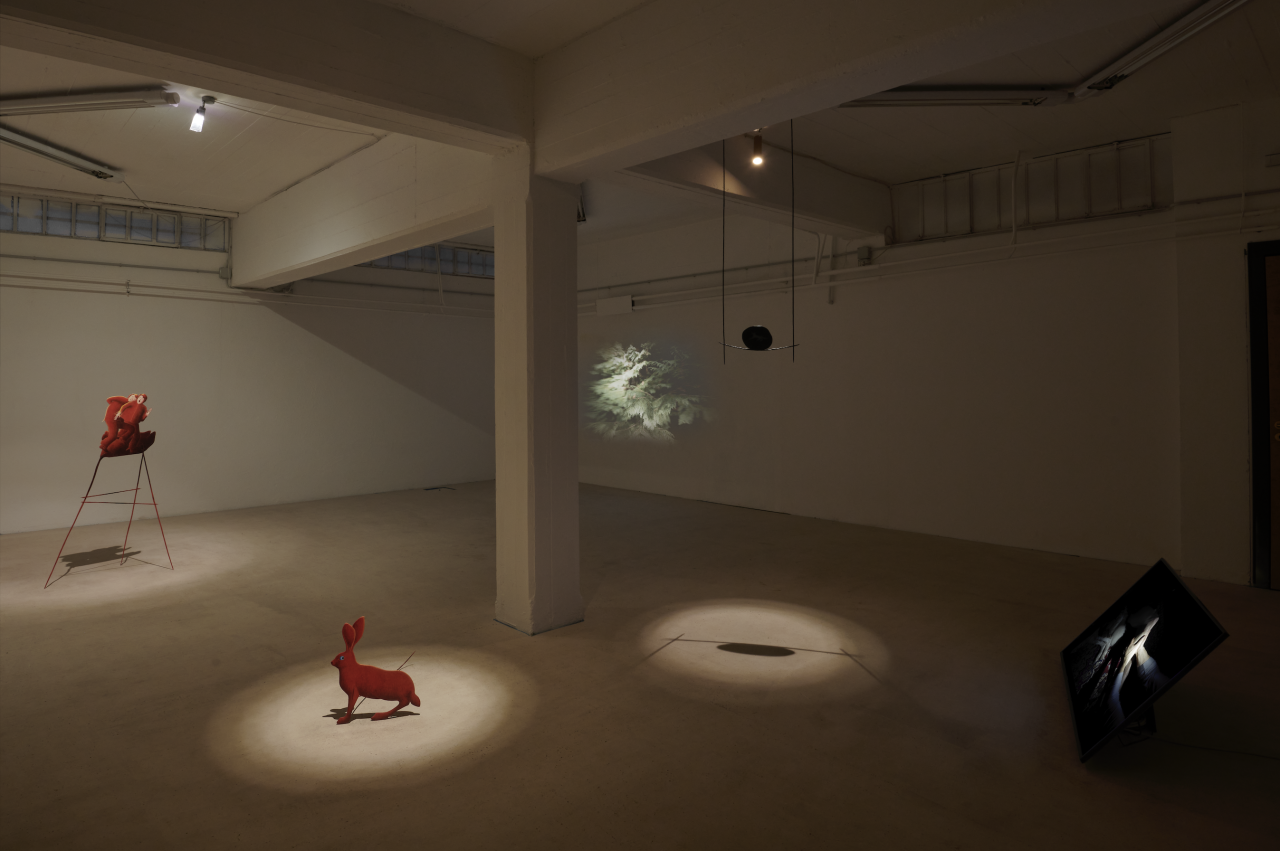
La mostra si sviluppa come un racconto in sospensione: una trama fatta di simboli contrastanti, di voci che si sovrappongono, di indizi che non puntano mai verso un unico colpevole. I personaggi si muovono tra istinto e disciplina, tra richiami al mondo animale e dinamiche dell’individuo contemporaneo. Il percorso non offre un approdo, ma un campo aperto in cui ritualità, adattamento e movimento continuo si intrecciano, invitando il pubblico ad attraversare una narrazione in costante trasformazione.
-
La mostra si apre come un racconto interrotto, un frammento narrativo in corsa: una trama fatta di simboli contrastanti, di voci che si sovrappongono, di indizi che non puntano mai verso un unico colpevole. Qui i personaggi, reali o evocati, diventano metafore delle nostre responsabilità collettive, dell’ambiguità che abita ogni società e dell’inevitabile carattere performativo del vivere insieme.
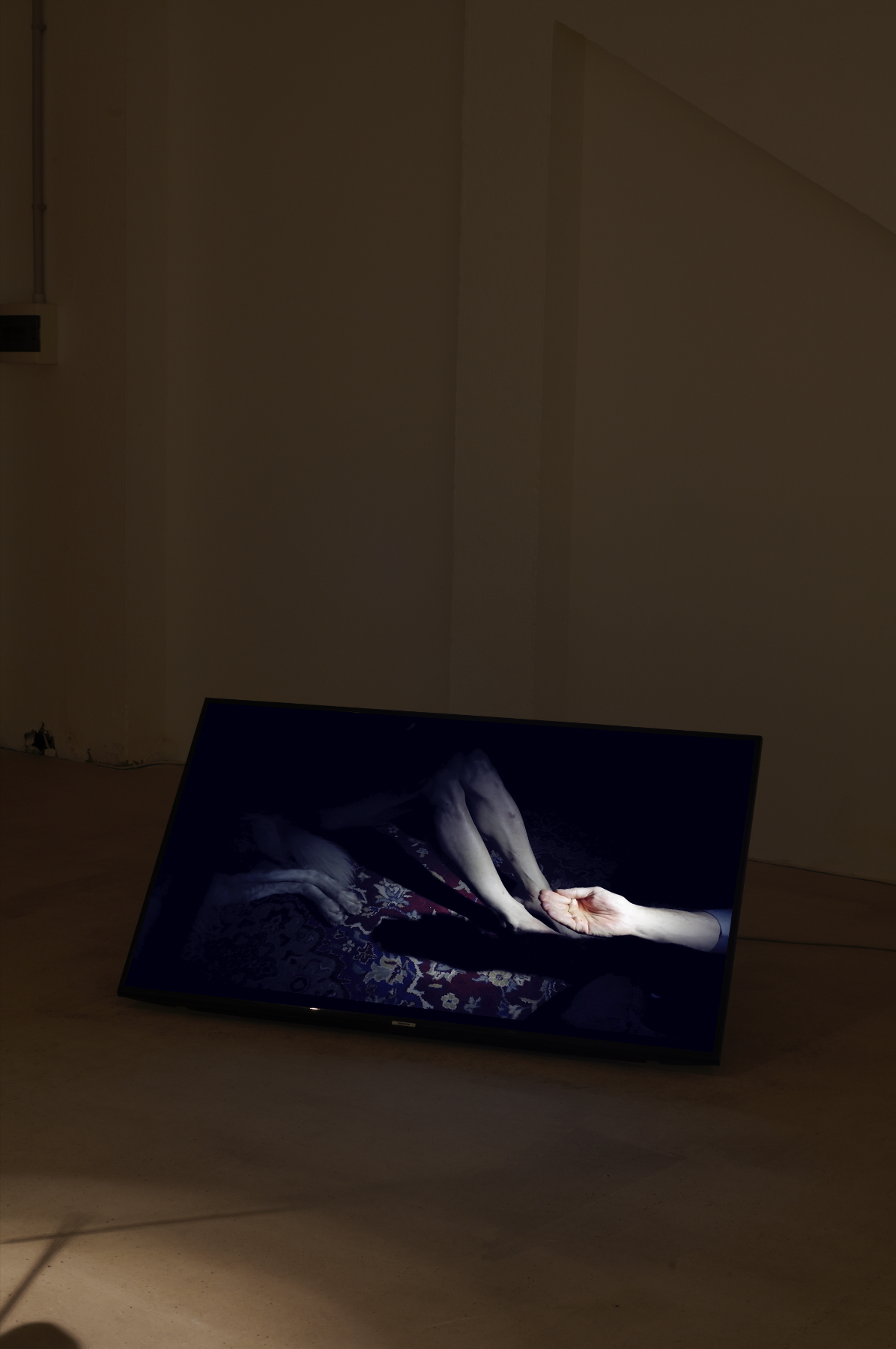
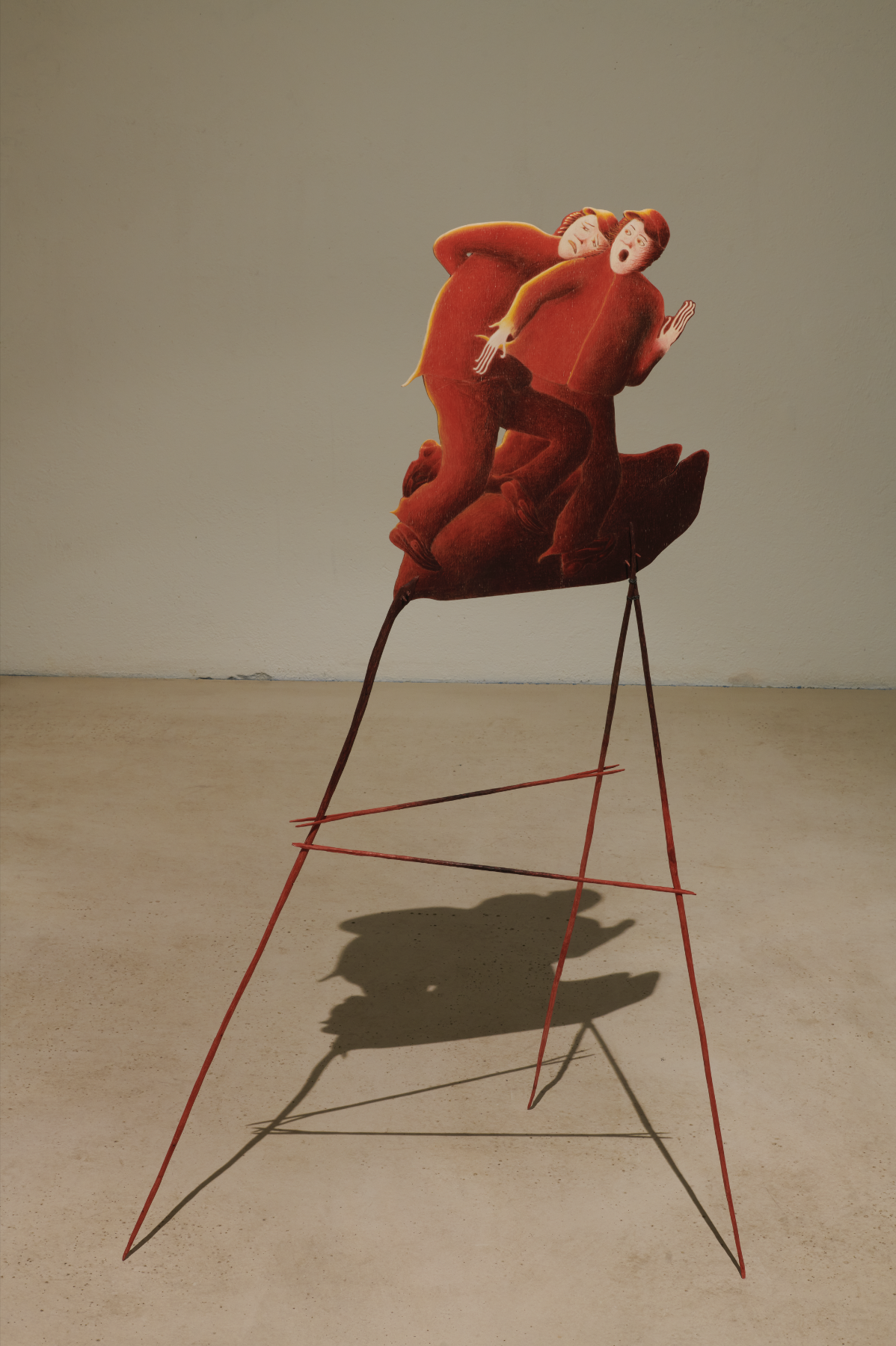
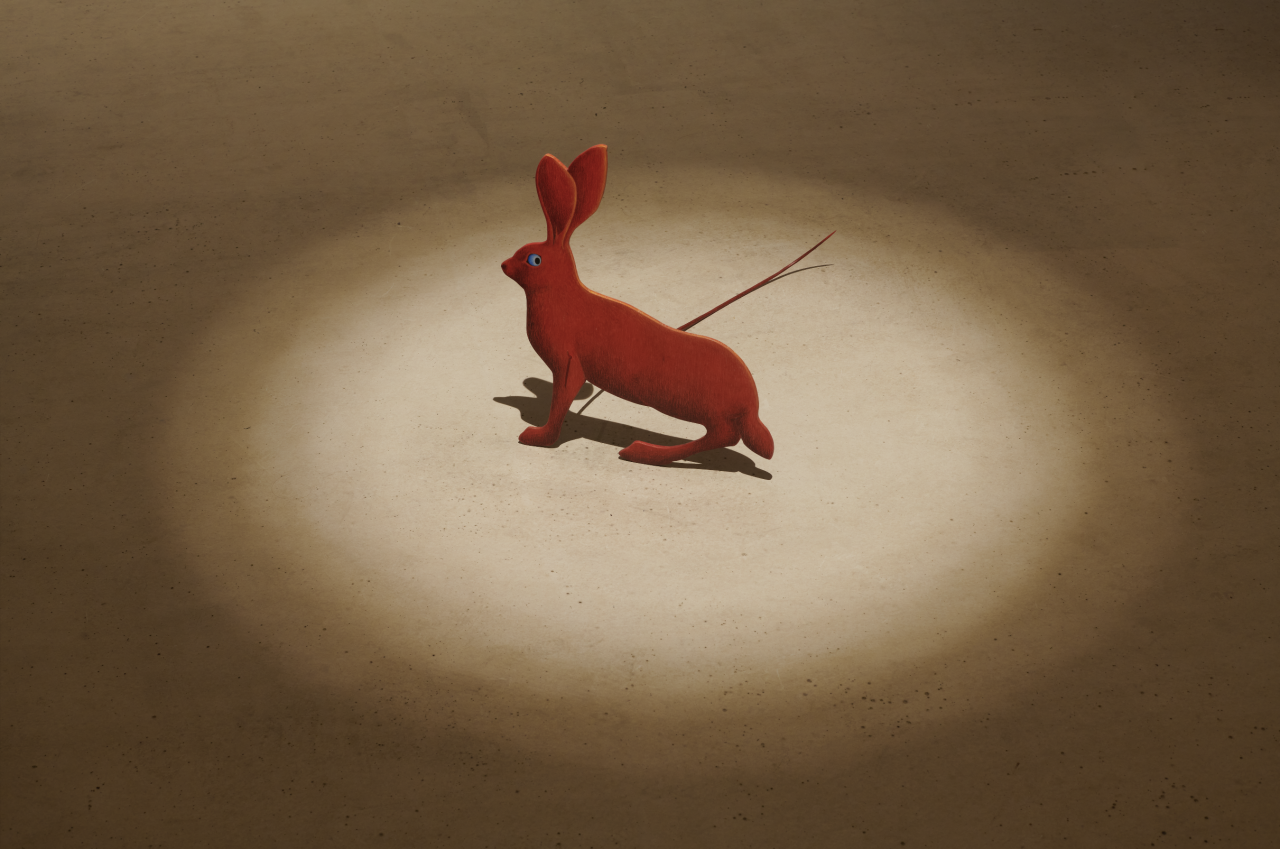
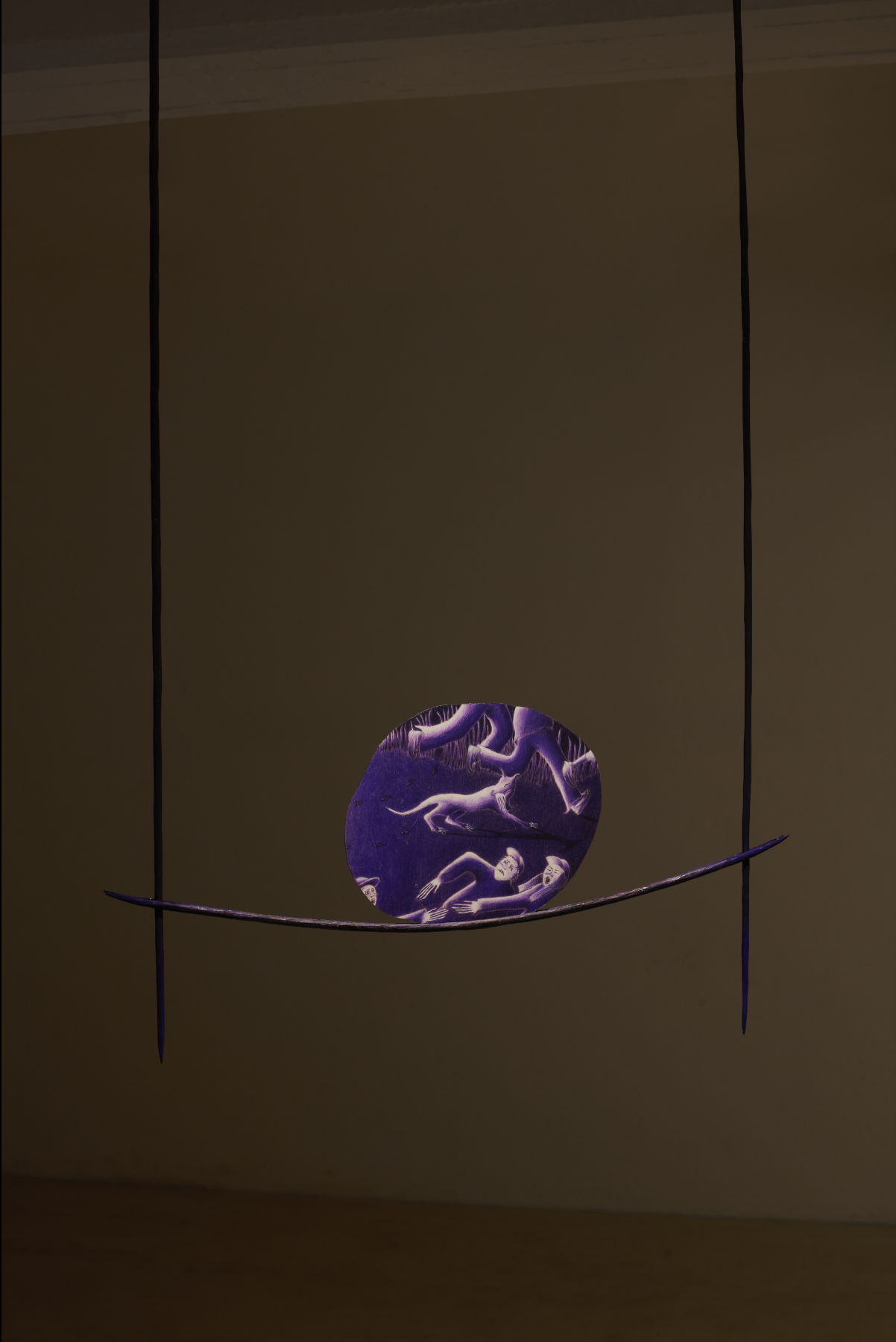
Il movimento è il motore di questa ricerca. La corsa, per l’artista gesto primario e istinto antico, si fa dispositivo simbolico: catalizza la tensione tra fuga e inseguimento, tra ricerca di una risposta e ricerca di un colpevole, tra esposizione e protezione di sé. Nei video e nelle opere lignee, ogni figura sembra oscillare tra il richiamo archetipico dell’animale – la coesione, il branco, la materia organica – e un impulso più contemporaneo, quasi egocentrico, a mettere in salvo il proprio corpo, la propria traiettoria.
Entrando nella mostra ci si trova immerse in un flusso narrativo senza inizio né approdo, un magma di linguaggi differenti – astratti, tecnici, poetici – che non tende all’accusa ma all’apertura. L’insieme invita a interrogare le ritualità che regolano la nostra performatività quotidiana: come ci adattiamo, tecnicamente e spiritualmente, emotivamente e simbolicamente, a un’esistenza che richiede costante movimento? Come dialoga la parte più istintiva e onirica del nostro essere con l’addestramento, l’agonismo e la disciplina che modellano il nostro stare al mondo?
In questo percorso, ogni opera è un passo che apre a un ritmo comune, un impulso che tiene insieme fuga e attrazione, solitudine e coralità. La narrazione rimane sospesa, come un respiro trattenuto: un territorio in cui la risposta non è un approdo, ma una direzione mutevole, un movimento che continua a trasformarsi mentre lo si attraversa.
“Dalla parte di Codarossa” is a solo exhibition by Nicholas Polari, on view at Almanac from Thursday, 11 December 2025.
Nicholas’s approach is deeply influenced by his extensive experience in endurance sports, which the artist adopts as tools of observation and transformation. At the core of his research are practices of adaptation: ways in which the body responds, reshapes itself, and establishes new rituals to navigate constantly shifting contexts.
The exhibition unfolds like a suspended narrative: a plot made of contrasting symbols, overlapping voices, and clues that never point to a single culprit. The characters move between instinct and discipline, between references to the animal world and dynamics of the contemporary individual. The path offers no landing point, but an open field where rituality, adaptation, and continuous motion intertwine, inviting the viewer to enter a narrative in constant transformation.
-
The exhibition opens like a story cut short, a narrative fragment mid-stride: a plot made of contrasting symbols, of overlapping voices, of clues that never point to a single culprit. Here the characters, real or evoked, become metaphors for our collective responsibilities, for the ambiguity inhabiting every society, and for the inevitable performative nature of living together.
Movement is the driving force of this research. Running, for the artist a primary gesture and an ancient instinct, becomes a symbolic device: it catalyses the tension between escape and pursuit, between the search for an answer and the search for someone to blame, between exposing oneself and protecting oneself. In the videos and wooden works, every figure seems to oscillate between the archetypal pull of the animal, cohesion, the pack, organic matter and a more contemporary, almost self-centred impulse to safeguard one’s own body and trajectory.
Entering the exhibition, one is immersed in a narrative flow without beginning or destination, a magma of different languages — abstract, technical, poetic — that leans not toward accusation but toward openness. The whole invites us to question the rituals that shape our everyday performativity: how do we adapt, technically and spiritually, emotionally and symbolically, to an existence that demands constant movement? How does the most instinctive and dreamlike part of our being converse with the training, the competitiveness and the discipline that mould our way of inhabiting the world?
Throughout this path, each work is a step that opens onto a shared rhythm, an impulse holding together escape and attraction, solitude and collectiveness. The narrative remains suspended, like a held breath: a territory in which the answer is not an arrival point but a shifting direction, a movement that continues to transform as one traverses it.